


The Highest Mountain in the World refers to the tallest peaks that rise above sea level — mountains that reach up into the clouds and are a significant part of our understanding of nature.
These mountains are not just geographical formations. They hold stories of human perseverance, geographical significance, and the power of nature itself.
When we talk about the highest mountains, we’re looking at the most impressive and challenging climbs on the planet—these seven highest mountains, from Mount Everest in Nepal to Dhaulagiri.
They represent the most remarkable elevations you can reach on land. Each one stands as a testament to Earth’s immense scale. It’s raw formations and the rich history of exploration by those who wish to reach their summits.
Here you will know about a clear and factual view of the seven highest mountains in the world: their elevations, locations, first ascents, and other key details.
Whether you’re a passionate climber, someone who loves nature, or simply someone eager to learn more, this guide offers a comprehensive look at the world’s highest peaks.
Highlights
- Mount Everest stands as the highest peak in the world at 8,849 m (29,032 feet)
- The Himalayas and the Karakoram range are home to the world’s tallest mountains
- Each of the seven highest mountains has its own unique stories, first ascents, and geographical significance
- The Seven Summits challenge involves climbing the highest peak on each continent
- Measuring a peak’s height is a complex process, involving sea level, base to peak, and more.
List of the Highest Mountains in the World
Let’s get to know the highest mountains by elevation with their stories, their significance, and what makes them a challenge for even the most experienced climbers.
-
Mount Everest
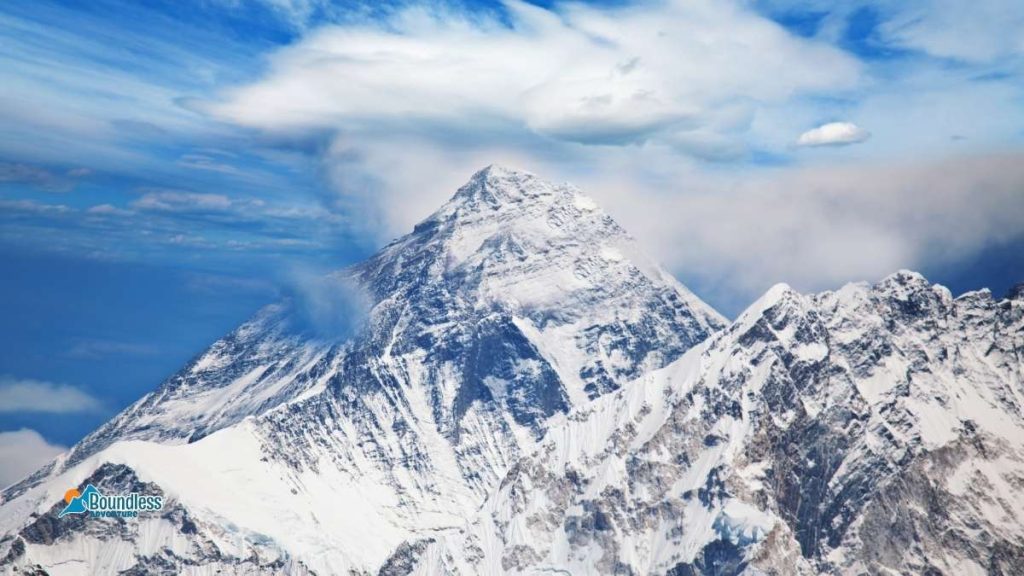
- Elevation: 8,848.86 m
- Location: Nepal
- First Ascent: 1953 by Edmund Hillary (New Zealand) and Tenzing Norgay (Nepal)
Mount Everest is the highest mountain in the world, a peak that stands taller than all others. Mount Everest is called “Sagarmatha” by the Nepalese and “Chomolungma” by Tibetans. It’s a symbol of human perseverance. Climbing Everest is a challenging endeavor due to its freezing temperatures, strong winds, low oxygen, and technical ice formations. Also, Learn about “How cold is Mount Everest?”.
The route to its summit crosses the famous Khumbu Icefall and involves navigating deep crevasses and icy slopes. Hundreds of climbers attempt to reach its peak every year. The two main routes to climb Everest are the Southeast Ridge from Nepal and the North Ridge from Tibet.
EXPLORE: Everest Region Treks by Boundless Adventure: Best Trekking Company In Nepal
-
K2 (Mount Godwin-Austen)
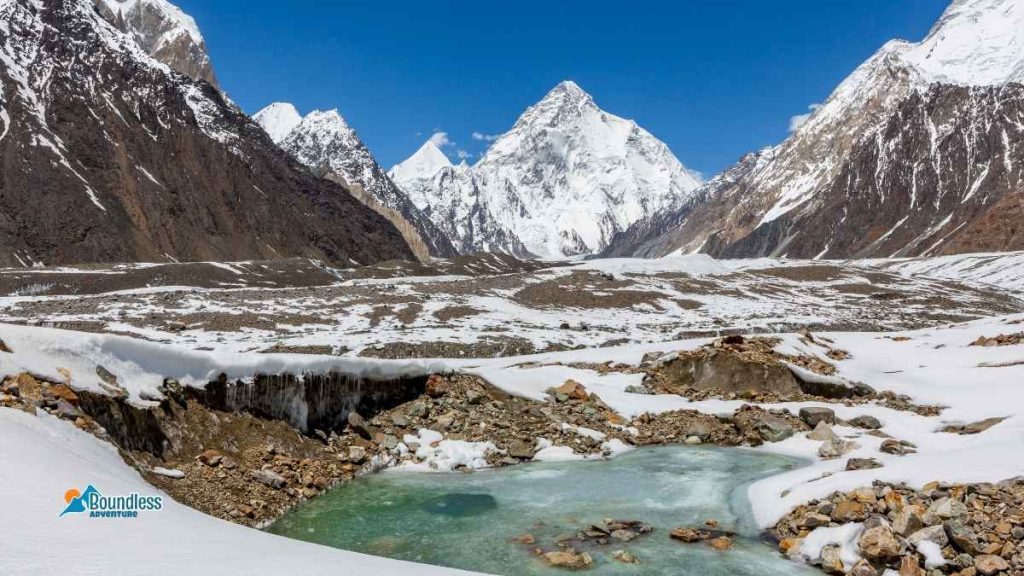
- Elevation: 8,611 m
- Location: Pakistan/China (Karakoram range)
- First Ascent: The first team successfully made it to the summit in 1954 after a dramatic and arduous expedition.
Mount K2, the world’s second-highest peak. K2 is known as “Savage Mountain” after George Bell, a climber on the 1953 expedition. The slopes are steep, avalanches are frequent, and the icy ridges make every step a challenge. This makes K2 a much less frequently climbed peak, adding to its allure for expert mountaineers.
-
Kangchenjunga
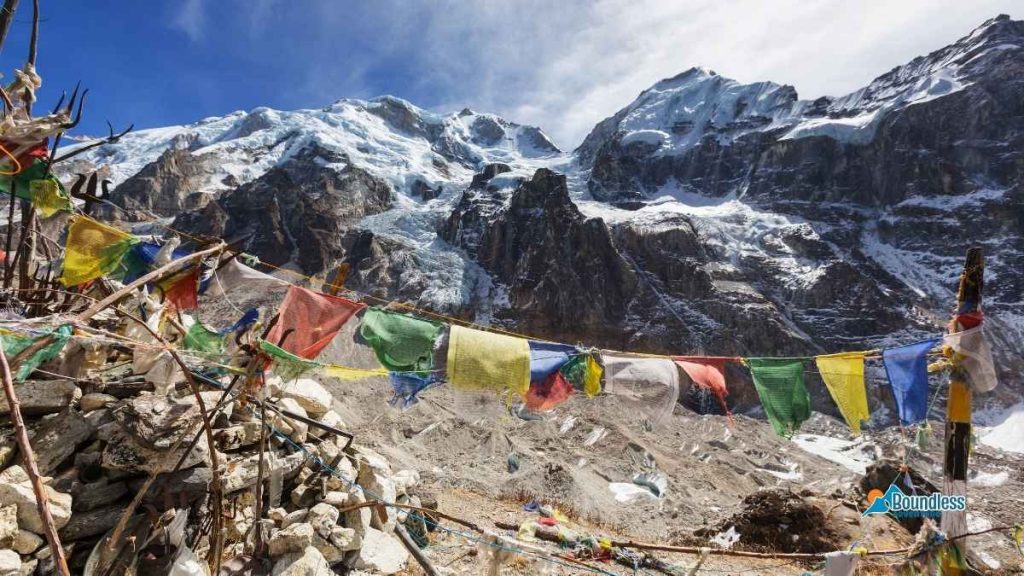
- Elevation: 8,586 m
- Location: Nepal/India (Himalayas)
- First Ascent: 1955 by Joe Brown (UK) and George Band (UK)
The name Kangchenjunga means “Five Treasures of Snow,” reflecting its five prominent peaks. This majestic peak stands as the third-highest in the world and forms a dramatic barrier between Nepal and India. The first team made it to the summit in 1955, but, following a longstanding tradition, stopped a few feet short of the very top to honor its sacred significance; however, the best way to go to Kanchanjunga Base Camp is from Nepal.
Kangchenjunga is a challenging and technical peak, requiring extensive experience in ice and snow climbing. The Kangchenjunga region is home to diverse flora and fauna. Protected by the Kangchenjunga Conservation Area in Nepal and surrounding reserves in India. The mountain holds spiritual significance for several local communities. It is a symbol of regional pride.
-
Lhotse
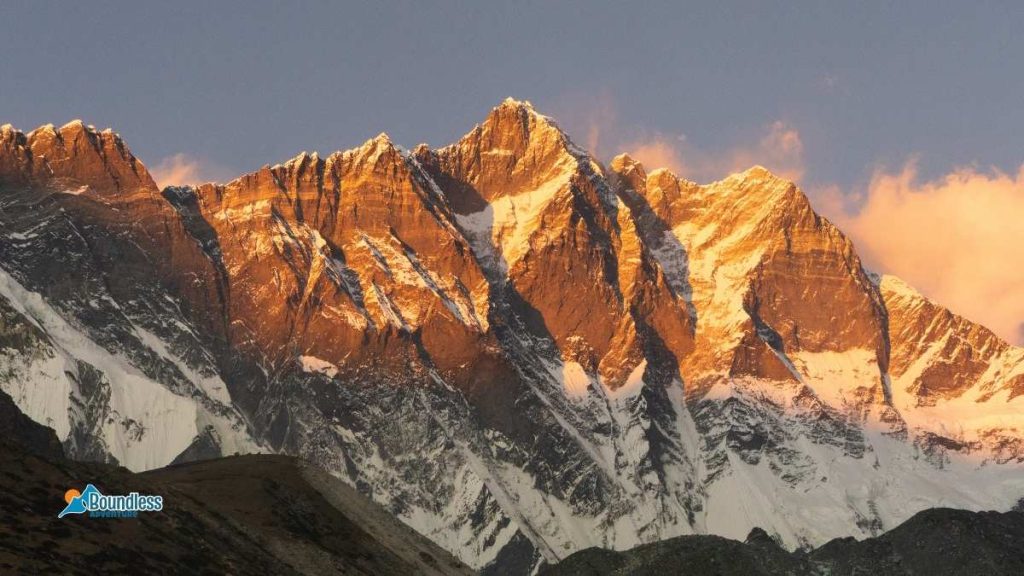
- Elevation: 8,516 m
- Location: Nepal/Tibet (Himalayas)
- First Ascent: The first successful ascent was made in 1956 by a Swiss team.
Lhotse is located south of Mount Everest. It is connected by the South Col, which is often called “the south peak”. Lhotse stands at 8,516 m. It is the fourth highest in the world. Lhotse has three main summits. They are Lhotse Main, Lhotse Middle (also known as Lhotse Shar), and Lhotse Far East.
While many climbers view Lhotse as a secondary objective after attempting Everest, it is a challenging and dramatic peak in its own right. The route of Lhotse is technical ice climbs and navigating a steep couloir.
-
Makalu
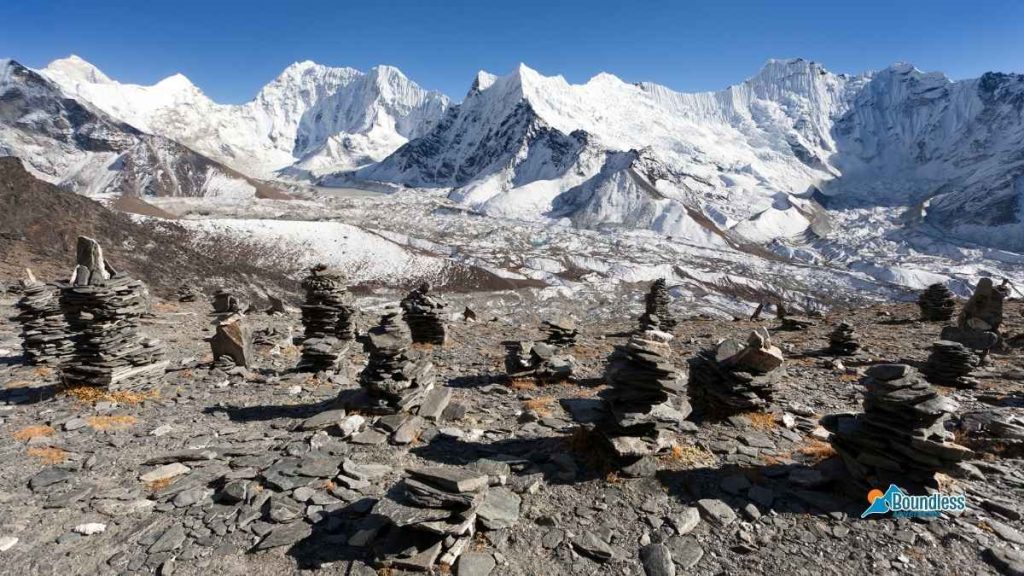
- Elevation: 8,485 m
- Location: Nepal/Tibet (Himalayas)
- First Ascent: The first successful ascent was in 1955 by a French expedition team.
Makalu is the fifth-highest mountain in the world. Makalu lies on the border between Nepal and Tibet (China) in the Mahalangur range of the Himalayas. It is the fifth-highest mountain in the world, standing at 8,485 meters (27,838 feet). The slopes are steep and technical, requiring advanced ice and rock climbing skills.. Makalu lies within the Makalu-Barun National Park. It is known for its rich biodiversity and pristine natural environment.
-
Cho Oyu
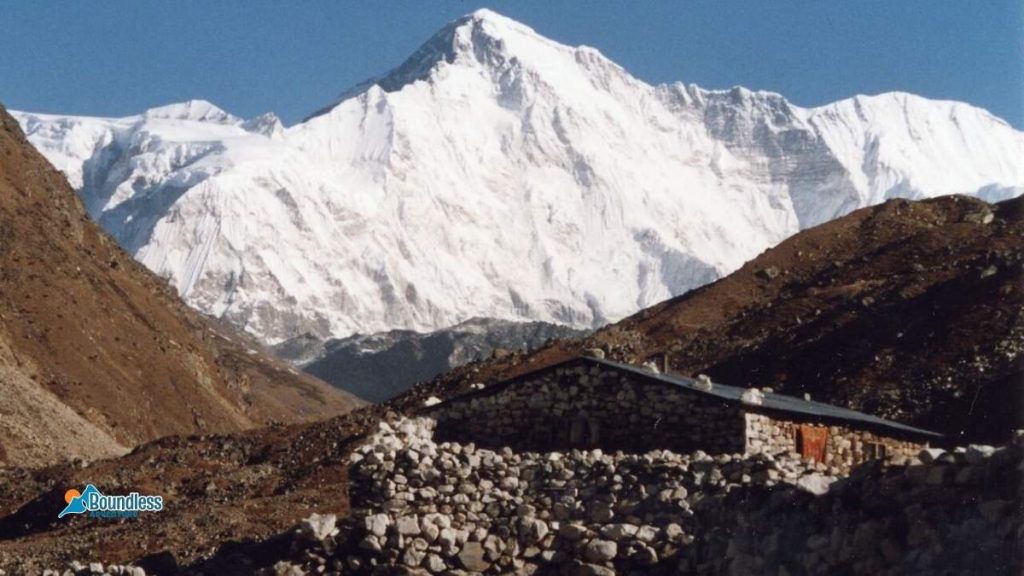
- Elevation: 8,188 m
- Location: Nepal/Tibet (Himalayas)
- First Ascent: Cho Oyu was first climbed in 1954 by an Austrian expedition.
Cho Oyu stands as the sixth-highest mountain in the world at 8,188 meters (26,864 feet). Cho Oyu is considered the most accessible 8,000-meter peak. It is located at the border of Nepal and Tibet. The name Cho Oyu means “Turquoise Goddess” in Tibetan. It reflects its striking blue-green hues. It is part of the Mahalangur Himal section of the Himalayas, near Mount Everest.
It offers a less technical route for those looking to reach their first 8,000-meter summit. However, it’s by no means an easy climb. The high altitude, strong winds, and icy slopes still pose significant danger.
-
Dhaulagiri
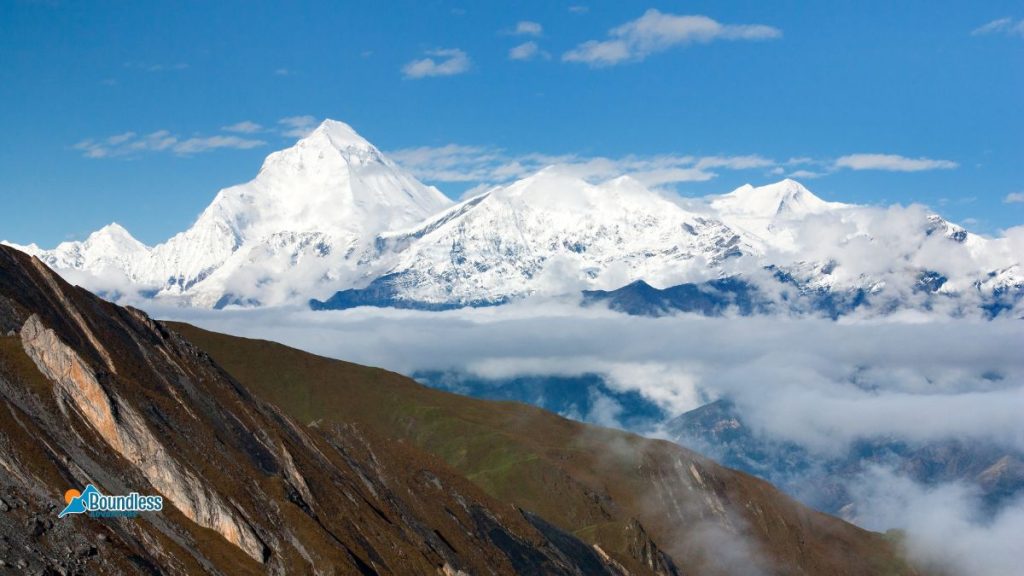
- Elevation: 8,167 m
- Location: Nepal (Himalayas)
- First Ascent: 1960 by Kurt Diemberger (Austria), Albin Schelbert (Switzerland), Peter Diener (Germany), Ernst Forrer (Switzerland), and Nyima Dorjee Sherpa (Nepal)
Dhaulagiri is the seventh-highest mountain in the world. Dhaulagiri, which means “White Mountain” in Sanskrit. Stands solitary and majestic in the Annapurna range of Nepal. The slopes are icy and prone to avalanches, adding a dramatic challenge to every climber’s quest to reach the peak. Dhaulagiri stands apart from other peaks. Forming its massif with significant prominence. The mountain is near the Kali Gandaki River valley. The Gandaki River is one of the deepest river gorges in the world.
What Is the Highest Mountain Ranking?
Here’s the highest mountain ranking — a list of the seven highest mountains in the world:
| Ranking | Peak | Elevation (m) | Location | First Ascent |
| 1 | Mount Everest | 8,849 | Nepal/Tibet | 1953 |
| 2 | K2 (Mount Godwin-Austen) | 8,611 | Pakistan/China | 1954 |
| 3 | Kangchenjunga | 8,586 | Nepal/India | 1955 |
| 4 | Lhotse | 8,516 | Nepal/Tibet | 1956 |
| 5 | Makalu | 8,485 | Nepal/Tibet | 1955 |
| 6 | Cho Oyu | 8,188 | Nepal/Tibet | 1954 |
| 7 | Dhaulagiri | 8,167 | Nepal | 1960 |
Which Are the Highest Mountains of Each Continent?
Did you know each continent is home to its own highest peak? This forms the basis for the Seven Summits challenge — a quest many climbers pursue.
- Asia — Mount Everest (8,849 m)
- South America — Aconcagua (6,961 m)
- North America — Denali (6,190 m)
- Antarctica — Vinson Massif (4,892 m)
- Europe — Mount Elbrus (5,642 m)
- Africa — Kilimanjaro (5,895 m)
- Australia (Oceania) — Carstensz Pyramid (4,884 m)
Which Is the Highest Mountain in the World?
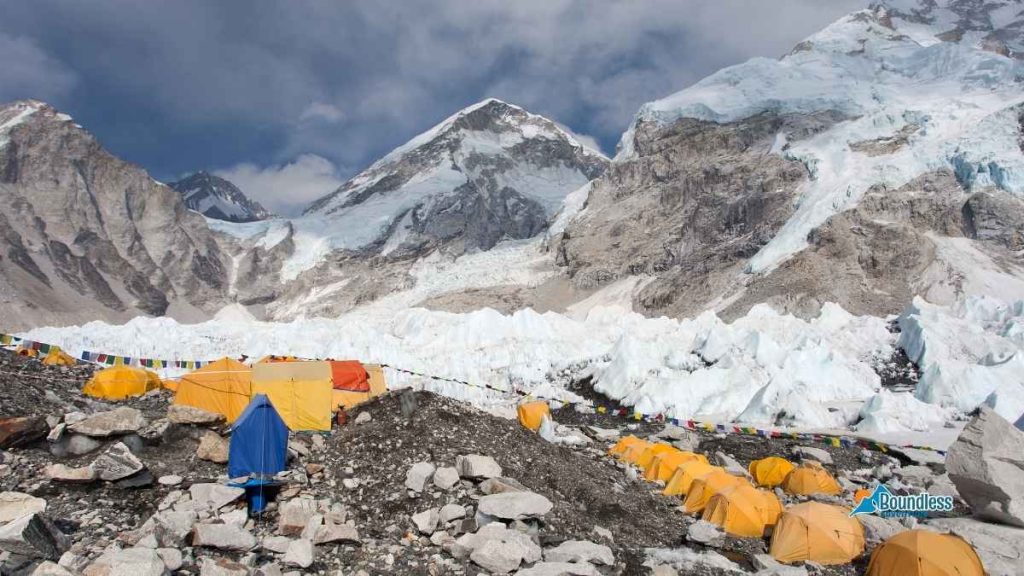
When we talk about the Highest Mountains in the World, there’s no doubt we’re referring to Mount Everest. Rising to a staggering 8,849 m (29,032 feet) above sea level, this majestic peak stands taller than any other.
Mount Everest is located in the Mahalangur range of the Himalayas, straddling the border between Nepal and Tibet. It’s a powerful symbol — a testament to nature’s immense scale and human perseverance. For the location of Mount Everest, read our blog, “Where is Mount Everest Located?“.
The first successful ascent was made by Edmund Hillary and Tenzing Norgay in 1953 — a moment that captured the imagination of the world.
Where Are the Tallest Mountains in the World?
Some people think that all high mountains are in the Himalayas — but that’s not entirely true. The tallest mountains in the world are predominantly located in the Himalayas and the Karakoram range, which crosses Nepal, India, Pakistan, Bhutan, and Tibet.
This range was formed by the collision of two massive tectonic plates — a process that forced the Earth’s crust upward, creating the dramatic landscape we see today.
Other continents have their impressive peaks — Aconcagua in South America, Denali in North America, and Kilimanjaro in Africa — but none reach the heights of the greatest Himalayan giants.
How Are the World’s Highest Peaks Measured?
When we talk about the world’s highest peaks, we usually measure their elevation above sea level. This means we calculate their height starting from the average level of the world’s oceans — a baseline for all mountains.
Some methods combine satellite signals with sophisticated ground surveys. Scientists take into account factors like the thickness of the ice, the depth of the snow, and even the pressure at their base.
This process isn’t as simple as it might seem. Some mountains grow or shrink due to plate movement or glacial activity.
The result? An ever-evolving list of the highest mountains. A reflection of our understanding of the world’s most incredible formations.
Final Thoughts
The seven highest mountains in the world are every climber’s dream. They show human strength, determination, curiosity, and respect for nature. Each mountain tells a story of adventure, the desire to push beyond limits, both in body and mind.
Whether you love climbing, enjoy nature, or just like beautiful views, these mountains remind us why the tallest peaks are so special.
So, when you think about the Highest Mountain in the World, remember Boundless Adventure today to start planning your unforgettable mountain journey!
FAQ’s
Which is the highest mountain in the world?
Mount Everest is the highest mountain in the world, reaching an elevation of 8,849 meters (29,032 feet). It is located on the border between Nepal and the Tibet Autonomous Region of China. Everest has long been a symbol of human adventure and endurance. Despite its challenging trail, thousands of trekkers attempt to reach its summit each year.
How many mountains are considered the highest mountains in the world?
Seven mountains are officially recognized as the highest mountains in the world because they all exceed 8,000 meters in elevation. These peaks are found chiefly in the Himalayas and Karakoram ranges in Asia. They are famous for their extreme altitudes and the challenges they pose to climbers. Together, they represent the ultimate goals for many mountaineers.
What makes the highest mountain in the world so challenging to climb?
The highest mountain in the world is challenging due to its extreme altitude. This causes low oxygen levels that make breathing difficult. Climbers must also deal with unpredictable weather and freezing temperatures. It is dangerous terrain, like icefalls and crevasses. The climb requires excellent physical strength and mental endurance. These factors make summiting Everest a serious and risky undertaking.
Which continent has the highest mountain in the world?
Asia has the highest mountain in the world. That is Mount Everest. It is part of the Himalayan mountain range, which stretches across several countries, including Nepal, Tibet, Bhutan, and India. Asia is home to most of the planet’s tallest mountains. This region is known as the “Roof of the World” because of these towering peaks.
How long does it take to climb the highest mountain in the world?
Climbing the highest mountain in the world generally takes around six to nine weeks from start to finish. This includes time for acclimatization to high altitude, which helps prevent altitude sickness. Climbers also need to wait for favorable weather windows to make their final summit push.
Are the highest mountains in the world dangerous?
Yes, the highest mountain in the world and other tallest peaks are perilous due to harsh weather, avalanches, and low oxygen levels. Many climbers face serious risks such as frostbite, altitude sickness, and falls. Despite safety measures, fatalities occur each year during expeditions. Proper training and experience are essential to reduce these risks.
Can beginners climb the highest mountain in the world?
Climbing the highest mountain in the world is not recommended for beginners because it requires advanced mountaineering skills. The climb demands physical fitness. Experience with altitude. The ability to handle technical climbing sections. Most climbers prepare for years by tackling smaller mountains first. Proper guidance and thorough training are essential before attempting Everest.