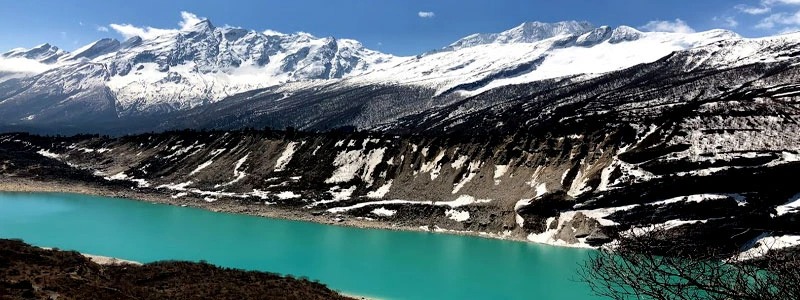
The vast, high lakes in Nepal, including Ice caps, the beautiful lakes and cliffs, and the green forests that cover the landscape like an emerald carpet, are just a few of Nepal's natural wonders that offer a paradise of grace and beauty unmatched anywhere else on Earth. However, are you thinking of exploring the Himalayas by Helicopter? Check out the video of Mount Everest.
You may be surprised to learn that Nepal, with more than 6,000 River valleys, 3,252 ice caps, and 2,323 lakes, has the second-highest density of inland water resources.
The element of instinctually good reasons why things draw us in is a charm, which is genuine and unadulterated. Does this imply that we do not find stress relief in artificial objects?
My intense focus on elegance initiatives is to promote relaxation through lake inspection. Even though we'd be in Nepal, with numerous Himalayan peaks and ice caps, finding rivers and streams won't be difficult.
There are numerous lakes in Nepal due to the country's abundant highlands. Multiple vacation packages include lake spotting and exploration. However, some are simple to trek, while others are very challenging for novice hikers. In most circumstances, it will be beneficial to have your guidance. Similarly, check out some of the highest Lakes in Nepal's Himalayas.
Highest Lakes In Nepal
Tilicho Lake
One of Nepal's hidden gems is the world's highest Lake, Tilicho Lake, which sits at 4,919 meters above sea level. Tilicho is not only famous for being the highest Lake but also for its beauty and elegance. Just ahead of Tilicho Apex is Lake Tilicho, which has a surface area of 1.853 mi2. Tilicho Lake is situated in the Annapurna Conservation of the Manang district of Nepal.
The route to Tilicho is often incredible, offering breathtaking views of Mt. Himlung, Mount Manaslu, and numerous other minor peaks along the coastline between the Annapurna and Manaslu Ranges. But there's nowhere individuals can see the stream flow, and the pond is full of icy, clear glacial water.
The best times of year to visit or travel across Tilicho Lake are in the Spring, between March and April, and in the fall, between October and November. Autumn is the best travel season due to the excellent weather and beneficial conditions. After the monsoon, the scenery is lush, with fields of different crops. If the weather is favorable and access is good, the trek through the Annapurna Himalayan region can be enjoyable.
The second-best travel duration is springtime, from early March to late May. Trekkers should visit Tilicho Lake, which is at its best in Spring. If feasible, travelers should defer their journey throughout the rainy season.
However, Tilicho Lake is along the way to the Mesokanto-La pass, a side trip on the Annapurna circuit trekking trail, and is at the base of Tilicho Peak, between the Manang and Dhaulagiri districts of Nepal.
Gangapurna Lake
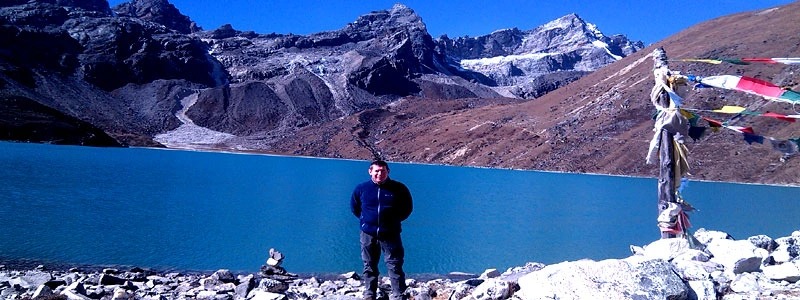
Gangapurna Lake is an ice lake in Nepal's Manang, the Gandaki Provincial capital. It was created by glacial ice from Khangsar, Annapurna IV, and Mt. Gangapurna (7,454m), respectively. The Lake is located next to Manang Valley, which is on the way to the Annapurna Circuit trekking trail.
Recently, it has been reported that Gangapurna, a glacial lake, is narrowing as sediment and other debris are moving alarmingly quickly through the Lake's inlet channels.
The Lake has a surface area of 21.08 hectares and has reportedly lost about a third of its depth. To stop the flow of soil and deposits, a straight-back wall has now been constructed with a spending plan of Rs 1 million provided by the rural district. The Lake is situated in the Annapurna Conservation Area of Nepal.
Birendra Lake
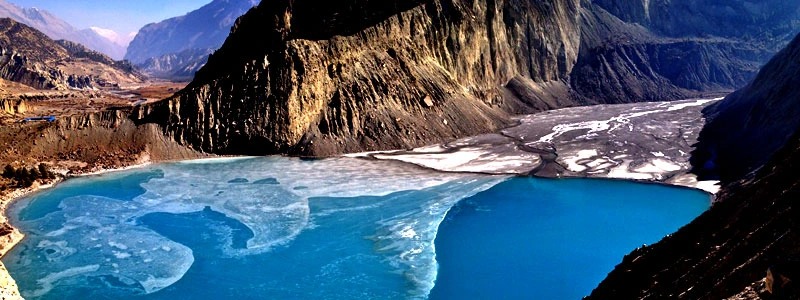
Birendra Lake is a freshwater lake in the northern-central Nepalese district of Gorkha. Punhyen Glacier and Samagaun's Gompa are nearby.
Route: The Upper Castle, at which King Prithivi Narayan Shah was brought up, and the Lower Palace can be visited during another stay in Gorkha's ancient Arughat Bazar, which begins in Soti Khola. After a day of acclimatization and the journey to Samdo, you may hike either to Manaslu Base Camp or to Birendra Lake.
The Lake is along the way to the Manaslu Circuit trekking trail into the Manaslu Conservation Area.
Gokyo Lake
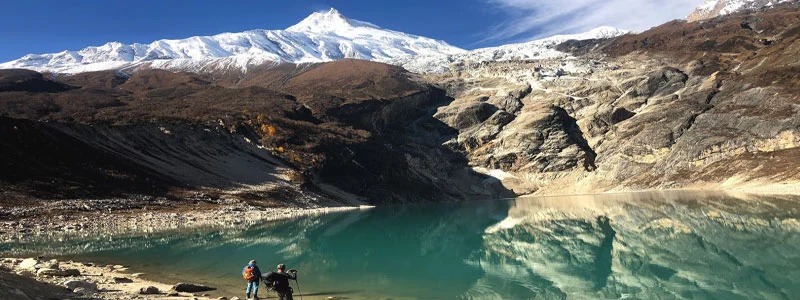
Gokyo Lake is part of the Sagarmatha Nature Reserve in eastern Nepal's Solukhumbu district. It is one of the most incredible lake structures, with six significant lakes. It is a beautiful lake at an elevation of 4700 to 5000 meters above sea level.
The native Hindu and Buddhist societies respect Gokyo Lake as a holy lake. Many worshippers consult this pond to take sacred baths during the Janai Purnima festival. There is indeed a temple of lord Shiva and Lord Vishnu at the Lake's southern end, and people also worship the snake god, recognized as Naag Devta, there.
This heavenly Lake, nevertheless, is part of the enormous Lake of Everest Base Camp. This circular path allows travelers to return along the same trail, which trekkers regard as the most suitable route. Furthermore, the belief that species and native animals must not be injured or killed in this area has historically helped conserve natural resources, including wildlife.
Similarly, the Gokyo Valley Trek stays to explore Gokyo Lake and Gokyo-Ri for two nights. The Ri is 5357 meters from sea level. It is the best viewpoint for Mount Everest, Mount Gokyo, and the surrounding ranges.
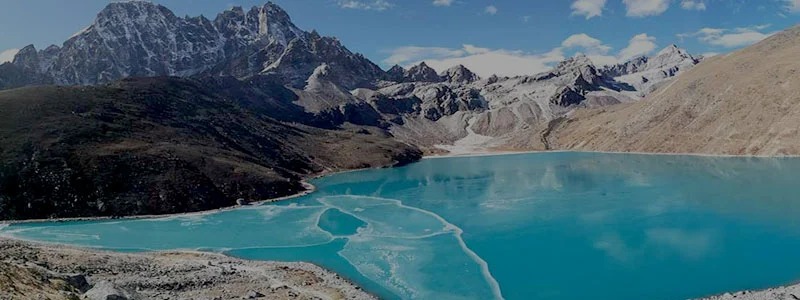
Imja Tsho Lake
Imja Tsho is a frozen pond that formed when melting ice began to accumulate in the 1950s at the bottom of the icy volume, near the Imja Glacier (Island Peak) in the Everest region. Based on a 1962 aerial photo, the bay was first imagined as a duo of lakes. Since melting icy masses in the 1970s, the ponds gathered into an incredible lake. The Lake is the highest Lake in Sagarmatha, Nepal.
Undoubtedly, Imja Tsho is one of the ponds in the Himalayas that could be risky. On the lower portion of the ice sheet, the Lake is situated at the base of its mother sheet of arctic ice. The Lake expanded by 0.025 square kilometers per year between 2000 and 2009.
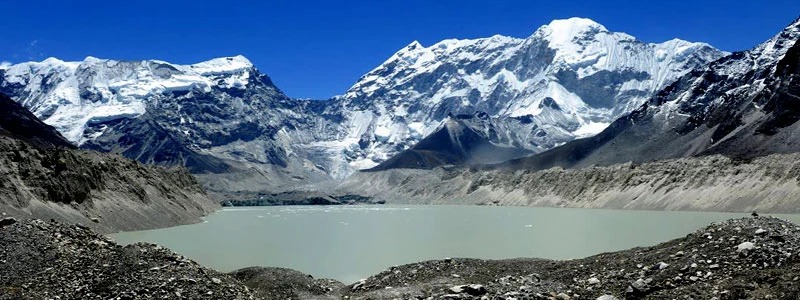
Gosainkunda Lake
Gosaikunda is the name of the most natural sacred body of water. It is located in the Rasuwa district of Nepal and covers an area of roughly 13.8 ha (34 acres). These people frequently think that the Lord bathed in this Lake after spending decades meditating in Tibet and the Nepalese Himalayas. We believe that Lord Shiva created Gosaikunda Lake after he pushed his Trishul (Trident) into a hill to obtain water to treat his poisoned throat.
There are more than 108 Kundas (Ponds) in the area, with Saraswati Kunda, Bhairab Kunda, and Surya Kunda being the most notable. Both Hindus and Buddhists make the annual trip to this pond to bathe, and pilgrims come from all over the country by helicopter and on foot.
Most People initially trek through the Langtang Valley and hike to Gosainkunda. Continue trek to Chisapani, Nagarkot. The elevation of the Lake is 4380 meters above sea level.
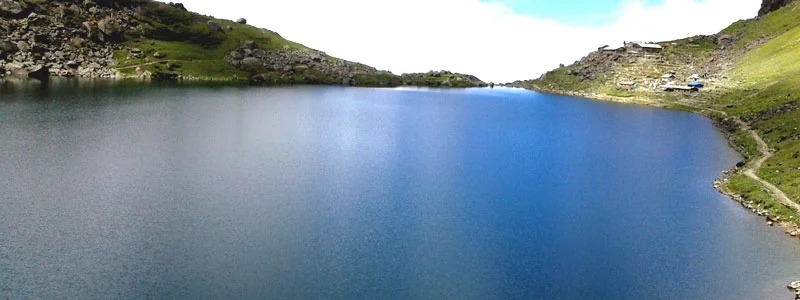
Rara Lake
Rara Lake is in Nepal's Mugu area, Karnali region. It is the most famous and significant Lake. It is 10.8 square kilometers in size, has a maximum range of 5 kilometers, and a diameter of 3.2 kilometers. Depending on the conditions, it refracts light three to five times daily. The Lake is listed at 2,990 meters above sea level. You may find it on Google Maps G4M2+PG3, Rara Lake, Rara 21100, Nepal.
The most excellent Lake in Nepal, Rara Lake, is in the Rara Wildlife Reserve. 20 of the 49 visiting bird species still enjoy the streams in Rara. There are 50 distinct mammal species in Rara Lake, such as the Mountainous Black Bear, Musk Deer, and Thar.
Other native and migratory birds, such as mallards, pheasants, and common teal, are also visible to visitors. However, since the Asala (Himalayan) species are found only there, Rara Lake is exceptional, offering fantastic views of Mt. Sistine and Kanjirova.
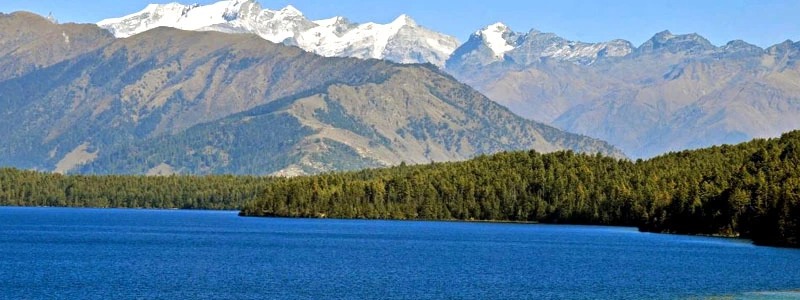
Shey Phoksundo Lake
However, Shey Phoksundo Lake is still recognized as Rim Lake in Nepal and is situated in the Dolpa district. There are two Dolpo treks: the upper and lower Dolpo treks, both of which are led through the Lake.
The Lake is 4.8 kilometers long and 1.6 kilometers wide, with a depth of 650 meters. It is a Y-shaped lake in the hills of the Kanjirowa Mountains.
Most people living near Shey-Phoksundo Lake in Dolpa seem to be Buddhists. More than 20 Buddhist stupas are located around the Lake, and a monastery is on the east side. The Thang Choling Monastery, built in the 15th century, is on the Lake's coast. Ringmo village is hugely affected by Tibetan culture. It is 3,990 feet above sea level.
There are settlers, a few residences, and guesthouses where tourists can enjoy the warm nights. The world's largest snow leopard can be found in Upper Dolpa.
Tsho Rolpa Glacier Lake
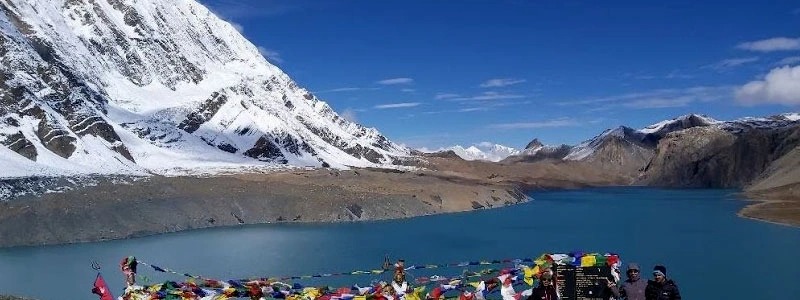
Tsho Rolpa is Nepal's largest glacier lake. It lies in the Dolakha District at an elevation of 4,580 meters between the renowned Langtang and Everest peaks. Those who undertake this journey are rewarded with spectacular views of Mt. Gaurishankar, Ganesh Himal, Mt. Manaslu, and the Langtang Himalayan range.
The journey from Dolakha to Nagaon is the longest, with constant uphill terrain and high elevation throughout the trek, making it challenging. With that said, watch for leeches, which are common along the trail. The following day, after a two-and-a-half-hour trek, you arrive at Tsho Rolpa Lake. The gorgeous blue update of cold liquid shines like a gemstone in the middle of the wide-angle snowfields.
Titi Lake
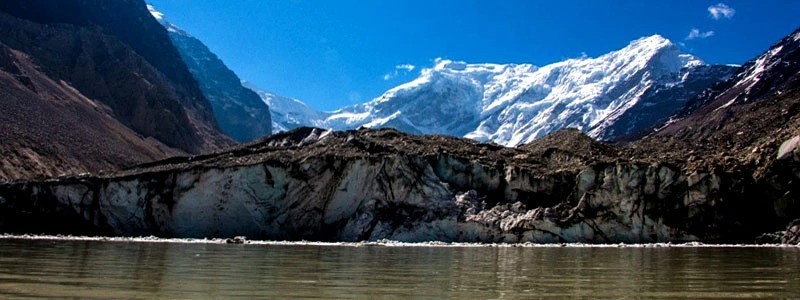
Titi Lake is one of the essential ponds in Nepal's Annapurna Conservation Area (ACA). The Lake is situated in the fresh temperate zone of the Front Himalayas, which is noteworthy for preserving the genetic makeup of specific bird species and for its high species diversity.
A study also includes a few shielded river-basin oases from wetlands to protect the area's biodiversity. The mood may change throughout the year, including in 2007. The soils have a sandy texture and are composed of sand (72.2%), silt (16.9″), and clay (10.9%).
Enjoy the highest lakes in Nepal's Himalayas, and contact us if you have any further plans to explore one of them.