


Nepal is one of the best places in the world for trekking if you are planning to see Mount Everest or wander through peaceful villages in the Annapurna region. But before you lace up your boots and hit the trail. There are a few things you need to know.
In this guide, you will know all the essential Nepal trekking information – from permits and best seasons to safety tips, packing lists, local culture, and more. Whether you're a first-time hiker or a seasoned adventurer, this page will help you get trail-ready with confidence.
Nepal is a small country offering a range of adventure activities, including trekking trails and tours. Here is some essential information about the Trekking region of the Nepal Himalayas.
Trekking Permits in Nepal: What You Need and How to Get Them
Before you head out on a trekking adventure in Nepal, there's one crucial thing you'll need to sort out: permits. Think of them as your official pass to enter the beautiful mountains, national parks, and conservation areas. These permits not only keep you safe by registering your travel plans but also help protect the trails, forests, and local communities you'll be walking through.
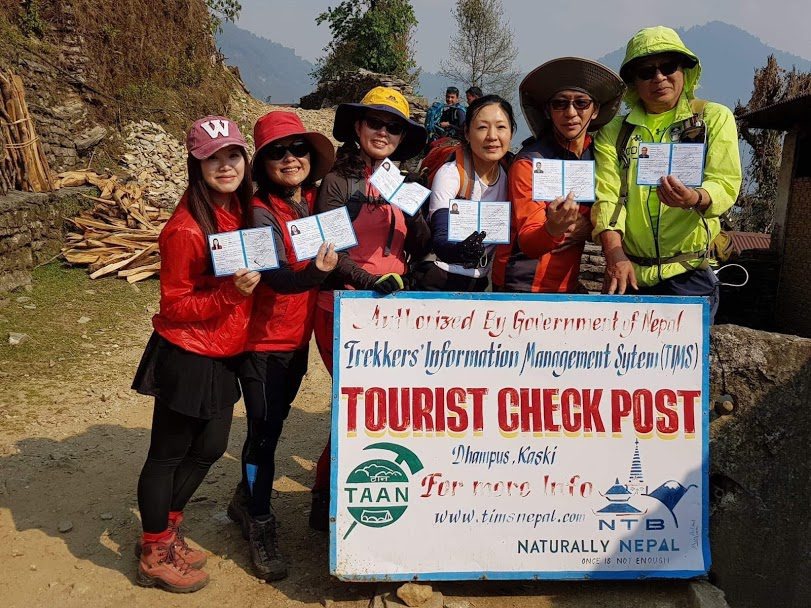
Don't worry, getting them isn't hard, especially if you're trekking with a trusted company like Boundless Adventure. Let's review the main trekking permits in Nepal and where you'll need them.
1. TIMS Card (Trekkers' Information Management System)
If you're trekking in Nepal, you might come across the term TIMS Card, which stands for the Trekkers' Information Management System. Think of it as your official registration that tells the authorities when, where, and with whom you're trekking.
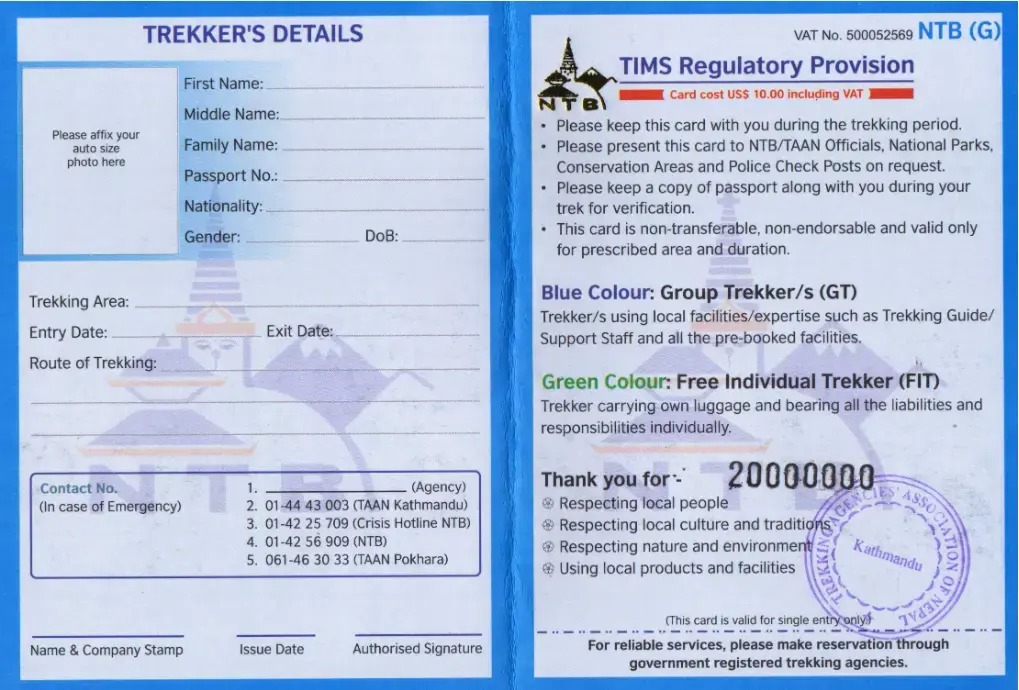
The TIMS Card was introduced to keep trekkers safe and to ensure a record of their journey in case of emergencies such as natural disasters, altitude sickness, or getting lost. It also helps the government and trekking agencies better manage visitor flows and maintain the trails.
As of April 2023, solo trekking without a guide is no longer allowed in most trekking regions of Nepal. That means the TIMS Card can now only be issued by a government-licensed trekking agency, such as Boundless Adventure, and must include your guide's details.
TIMS Card Quick Facts:
- Where it's required: A TIMS Card is required for treks in places such as Annapurna, Langtang, and Manaslu.
- Where to get it: You can only obtain it through a registered trekking company in Nepal.
- Issued to: Foreign trekkers travelling with a licensed guide.
Why It Matters
- The TIMS Card enhances trekking infrastructure and supports the growth of local tourism.
- The small fee you pay supports maintaining trekking routes, training rescue teams, and keeping the mountains welcoming to everyone.
- The TIMS Card is actually a safety net for you and the people looking out for you on the trail.
2. National Park or Conservation Area Permits
A park permit is also required, depending on the location. The most common ones are as follows:
ACAP – Annapurna Conservation Area Permit
The ACAP is what you need to see one of the most magnificent and varied trekking regions of Nepal's Annapurna region. The largest conservation area in the nation is the Annapurna Conservation Area. It covers everything from subtropical forests to snow-covered peaks. This permit helps fund critical work, including maintaining the treks and preserving the local environment. It also supports the villages you will pass through during your trek.
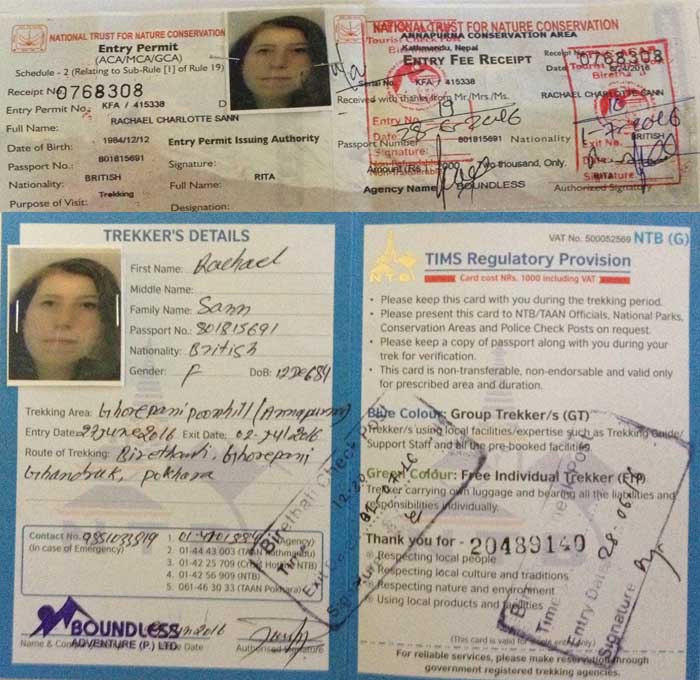
ACAP Permit Quick Facts:
- Where it's needed: Annapurna Circuit, Annapurna Base Camp, Mardi Himal, Poon Hill, etc.
- Where to get it: Kathmandu or Pokhara (or through your trekking agency)
- Validity: It covers the entire Annapurna region and is valid for a single entry
Why It Matters
- The fee you pay for the ACAP helps preserve fragile ecosystems and supports local education and health programs.
- It ensures that future trekkers can enjoy the same beautiful trails you will. It's a small step for you but a big deal for responsible tourism in Nepal.
SNP – Sagarmatha National Park Permit
Sagarmatha National Park is home to rare animals worldwide, such as the snow leopard and red panda (for more, visit Mount Everest Wildlife). Here you will also see ancient Buddhist monasteries and Sherpa villages. The SNP permit gives you legal access to this protected region.
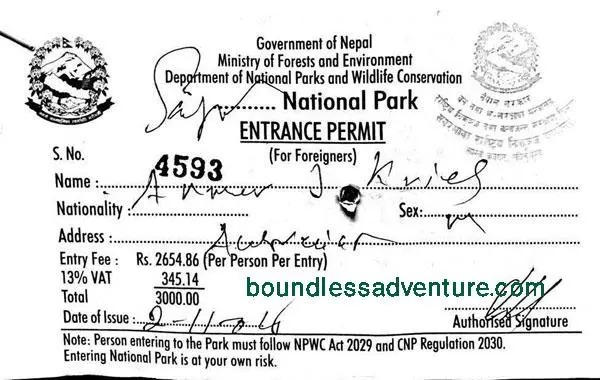
SNP Permit Quick Facts:
- Where it is needed: A permit is required for Everest Base Camp, Gokyo Lakes, Three Passes, Tengboche, Namche Bazaar, and all treks within Sagarmatha National Park.
- Where to get it: Kathmandu, Monjo park entrance gate, or through your trekking agency
- Validity: One-time fee for entry into the national park
Important Note:
In addition to the SNP permit, trekkers in the Everest region also need the Khumbu Pasang Lhamu Rural Municipality Permit, issued in Lukla and costing NPR 2,000. These two permits are required for most treks in this region.
Why It Matters
- This permit helps protect one of the world's most iconic trekking destinations.
- It helps manage waste and maintain the stone steps you will climb.
- Your contribution helps keep the Everest region clean, safe, and culturally rich for everyone, including future trekkers like yourself.
MCAP – Manaslu Conservation Area Permit
If you're planning to hike the Manaslu Circuit Trek, one of Nepal's most scenic and off-the-beaten-path adventures, you'll need the MCAP, which stands for Manaslu Conservation Area Permit.
The Manaslu region circles Mount Manaslu, the eighth-highest Mountain in the world, and passes through some of the most remote villages in the Himalayas. Since it's a protected area, the government requires all trekkers to have the MCAP before entering. This helps preserve the natural environment and supports local communities.
The Manaslu Circuit offers an authentic taste of the wilderness —fewer crowds, raw beauty, and authentic mountain culture. And with that comes the responsibility to help protect it.
MCAP Permit Quick Facts:
- Where needed: It is required throughout the Manaslu Conservation Area, especially in the lower sections of the Manaslu Circuit Trek.
- Where to get it: Through a government-registered trekking agency (like Boundless Adventure)
- Validity: Valid for the entire Manaslu Conservation Area section of the trek
Important Notice:
To trek in the Manaslu region, you will also need a Restricted Area Permit (RAP) since part of the trail runs close to the Tibetan border. This permit is more expensive and must be arranged in advance. Plus, once you pass Larke La Pass and enter the Annapurna region, you'll also need an ACAP (Annapurna Conservation Area Permit). Yes, three permits in total.
Why It Matters
- The MCAP plays a significant role in protecting the pristine environment of Manaslu, including endangered animals, alpine forests, and ancient monasteries tucked away in the hills.
- It also helps fund education, health, and tourism infrastructure in the remote villages you'll be visiting.
- When you trek through Manaslu, you're not just walking through nature; you're walking through a community's home. The MCAP helps ensure that your presence leaves a positive footprint.
Langtang National Park Permit
Suppose you're planning a trek to Langtang Valley, Gosaikunda Lake, or the peaceful Helambu region. You will then need the Langtang National Park Permit. This permit gives you access to one of Nepal's oldest and most beautiful protected areas, Langtang National Park.
The park is known for its lush forests, yak pastures, high alpine lakes, and towering peaks. It is also home to rare wildlife such as red pandas, Himalayan black bears, and more than 250 bird species.
Obtaining the permit is straightforward, and the fee supports preserving the park's biodiversity and supporting the local Tamang communities you'll meet along the way.
Langtang National Park Permit Quick Facts:
- Where required: It is required for the Langtang Valley Trek, the Gosaikunda Trek, and the Helambu region.
- Where to get it: You can get it from the Nepal Tourism Board in Kathmandu or at the park entrance in Dhunche.
- Children under 10: Free
- Validity: A one-time entry permit valid for the duration of your trek.
Why It Matters
- Langtang National Park is located in Nepal. Being alive, breathing, the weather, and day-to-day activities are essential to the country's culture and heritage.
- The permit fee helps to maintain the trails and protect endangered species.
- It also supports local development projects in the villages you will pass through during your trek.
- By purchasing the Langtang permit, you help keep this beautiful region clean, safe, and thriving for future trekkers.
3. Restricted Area Permits
Some parts of Nepal are designated restricted areas not because they're off-limits, but because they're particularly sensitive. These regions are close to international borders (like Tibet/China), home to unique ethnic cultures, or less developed in terms of infrastructure. To protect these areas and keep travelers and locals safe, the government requires a special pass, the Restricted Area Permit (RAP).
Without this permit, you cannot enter these regions, and a registered trekking agency and a licensed guide must accompany you. Most of the time, you will also be required to be in a group of at least 2 people (excluding your guide or porter).
Where Are These Restricted Areas?
Here are some popular treks that fall under restricted zones:
- Manaslu Circuit Trek (between Jagat and Sama Gaun)
- Upper Mustang Trek (a remote, Tibetan-influenced region)
- Tsum Valley Trek (offshoot of Manaslu, culturally unique)
- Nar Phu Valley Trek (isolated valley near Annapurna Circuit)
- Dolpo Region Treks (very remote, northwest Nepal)
How to Get a Restricted Area Permit
You cannot apply for a RAP on your own. It must be arranged by a government-registered trekking agency, Boundless Adventure, before your trek starts. You will need to submit a copy of your passport, two passport-sized photos, and your detailed itinerary.
Why It Matters
Restricted Area Permits are designed to protect both you and the places you visit. The RAP helps manage visitor numbers, promote sustainable tourism, and support the local communities who call these remote places home.
Nepal Trekking Information With Its Regions
Everest Region Trekking Information
The Everest region, also known as the Khumbu region, is renowned for its stunning scenery and is a top choice for trekkers. The Everest region is known for the world's highest Mountain (Mount Everest). In addition to Mount Everest, the Everest region is home to other mountains, including Makalu, Ama Dablam, Cho Oyu, Nuptse, Lhotse, and Imja Tse (Island Peak).
Beyond the Mountains, the Everest region is known for its glaciers, ancient monasteries, and hospitable Sherpa people. It offers a range of trekking routes and altitudes, providing an adventurous experience, a sense of accomplishment, and cultural immersion. The various trekking routes in the Everest region include Renjo La Pass, the Everest Three High Passes, the Everest Panorama Trek, the Everest Base Camp Trek, Chola Pass, and the Gokyo Lake Trek. However, every trek starts at Lukla Airport and splits at Namche Bazaar.
To reach the Everest region, one of the most common options is to fly from Kathmandu to Lukla. Alternatively, during the peak seasons (Spring and Autumn), you can drive from Kathmandu to Ramechhap by bus or car, then take a flight to Lukla Airport from there. Namche Bazaar, Tengboche, Thame, Pangboche, and Dingboche are the major attractive villages of the Everest region, where you'll be provided with warm hospitality.
Although the Everest region is renowned for its trekking routes, including the Everest Base Camp Trek, and its breathtaking natural beauty, it remains a remote destination. The people there are still looking for opportunities and a simple life. The trekking trail is not well-maintained, making the trek more challenging.
Annapurna Region Trekking Information
Located at the center of Nepal's Himalayas, the Annapurna region has become a favorite destination for trekkers worldwide. It is attractive, blending natural beauty, Adventure, and cultural richness. It is a true heaven for experience seekers and lovers of the natural world. The Annapurna region is renowned for its natural beauty, majestic mountains, stunning landscapes, lush forests, hospitable people, and rich cultural heritage.
The Annapurna region is home to the 10th-highest Mountain in the world, Mount Annapurna, and is encircled by Mount Dhaulagiri, Mount Machhapuchhre, Mount Himchuli, and other mountains. The Annapurna region has several trekking routes, including the Annapurna Base Camp Trek, Ghorepani Poon Hill Trek, Nar Phu Valley Trek, Mardi Himal Trek, Mesokanta Trek, Upper Mustang, Annapurna Circuit, Jomsom and Muktinath Trek.
The Annapurna region journey generally begins in the pleasant city of Pokhara, which you can reach by plane or bus. If you prefer to fly, you'll be in Pokhara within 25 minutes. If you are willing to travel by bus, it'll take 7-8 hours. The starting point for the Annapurna region is Pokhara; the next destination depends on your itinerary.
The Annapurna Conservation Area permit is mandatory to visit the Annapurna region. The Area is home to diverse wildlife, plants, and various bird species, as well as unique animals such as snow leopards, Himalayan thar, and many endangered species.
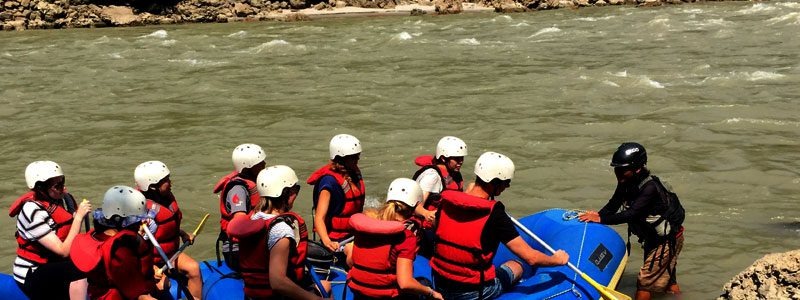
Langtang Region Trekking Information
Located 80km north of Kathmandu, the Langtang region offers several trekking routes that can be reached by bus rather than by flight. Although less popular, the Langtang region is becoming famous today. It offers numerous accessible, worthwhile trekking routes, including the Langtang Valley Trek, Tamang Heritage Trek, Gosainkunda, Ganja-La Pass, and the Helambu Trek.
The Langtang region includes Langtang Valley, Hemanbu, Gosaikunda, Tamanag Heritage, and Panch Pokhari. It is an excellent blend of natural and cultural riches, the kindness of the local people, and exciting adventures. The Langtang region also offers an opportunity to learn about the Tibetan and Tamang cultures, as the majority of the population is Tamang.
The best time to explore the beauty of the Langtang region is during Spring and Autumn to avoid challenges. During the Spring and Autumn, you can explore the region's beauty with minimal difficulty and enjoy every moment more fully.
Trekking Information of the Manaslu Region
The term "Manaslu" means Mountain in the Sanskrit word of Nepali. The Manaslu region is a remote area of Nepal that is less known to most trekkers. The Manaslu region offers two trekking routes: the Manaslu Trek and the Manaslu Tsum Valley. Both trekking courses provide the untouched beauty of nature and offer extraordinary trekking experiences.
In the Manaslu region, the Gurung people are known for their kindness and hospitality, and they maintain their own distinct culture, language, traditions, and way of life. In the Manaslu region, trekkers can find simple yet welcoming tea houses that offer insight into the local way of life.
The Langtang region is undoubtedly a haven of untouched natural beauty. Still, in addition to its natural beauty, the Langtang region is renowned for its ancient monasteries and chortens, where visitors can engage in activities and experience a profound sense of peace.
The Manaslu region offers adventurous trekking due to its remote location and unexplored trails. The Manaslu region offers numerous opportunities for trekking and climbing; however, a high level of fitness is essential, and acclimatization during the trek is crucial.
The Manaslu region offers impressive views of the Mountains, including Manaslu, Himal Chuli (North and West), Nadi Chuli, the Ganesh Himal range, and numerous unnamed peaks. From the top of the Larkya la pass, at an elevation of 5106m, you'll get a fantastic view of Dudhpokhari.
Trekking Information of the Dolpo Region
There are two different Dolpo regions. One is Upper, and the other is Lower Dolpo.
Upper Dopo
The Dolpo region is a remote area of Nepal, characterized by incredible natural beauty and rich ancient traditions. There are two different Dolpa trekking areas. The Dolpo region is renowned today for its trekking routes, with the major routes including the Upper Dolpo Trek and the Lower Dolpo Trek, both in restricted areas. The Upper Dolpo Trek, situated in the heart of the Tibetan Plateau and near Mount Dhaulagiri, is challenging.
The Upper Dolpo trek begins with a flight from Nepaljung to Juphal, followed by a tour of Shyanta. The highest elevation is reached. The trek passes through the amazing Phoksundo Lake, a blue lake, and Nangdalo-La is the highest point.
Lower Dolpo
The Lower Dolpo Trek is as unique as the Upper Dolpo Trek and as challenging. The Lower Dolpo Trek is in a restricted region, so you can't trek there solo and must obtain a restricted permit. The views of Mount Dhaulagiri and Phoksundo Lake are the highlight of the trek.
The best seasons to explore the Dolpo region are spring and Autumn. During these seasons, you'll have fewer difficulties. Suppose you plan to trek in the Dolpo region during Winter and Summer. Generally, it is not recommended, as the trails are not well-maintained and all trekking paths are covered in snow during winter. During the summer, the monsoon makes the track slippery and hazardous.
Additional Trekking Information of Nepal
When is the Best Time to Trek in Nepal?
Nepal has four distinct trekking seasons, and each offers something unique. But in general, spring (March–May) and Autumn (September–November) are the best times to trek.
| Season | Months | Weather | Highlights |
| Spring | March–May | Warm, blooming | Rhododendrons, great views |
| Autumn | Sept–Nov | Clear, stable | Perfect mountain views, festivals |
| Winter | Dec–Feb | Cold, snow | Quiet trails and lower-region treks are best |
| Monsoon | June–Aug | Rainy, humid | Great for Mustang & Dolpo (dry zones) |
How Difficult is Trekking in Nepal?
Trekking in Nepal is not a walk in the park, but it's not just for athletes either. If you are reasonably fit. If you can walk for 4–6 hours a day, you will be fine on most trails.
Trek Difficulty Levels
- Easy: Poon Hill, Ghorepani, Mardi Himal (short and low altitude)
- Moderate: Annapurna Base Camp, Langtang (some altitude, manageable trails)
- Challenging: Everest Base Camp, Annapurna Circuit, Manaslu (longer days, higher altitudes)
Altitude and Acclimatisation
Most trekking routes in Nepal go above 3,000 meters. That means there's a risk of altitude sickness.
Symptoms of Altitude Sickness
- You will get a headache.
- You start feeling dizzy and nauseated.
- At high altitude, oxygen levels drop so that you may feel short of breath.
Prevention of Altitude Sickness
- You must walk slowly and take frequent rest.
- Keep yourself hydrated, drink lots of water.
- If you develop altitude sickness, take 1-2 days' rest to recover.
- You may take Diamox only if your doctor prescribes it.
Packing List: What to Bring During Nepal Trekking
Here's a quick list of essentials for your Nepal Trek:
Clothing
- Thermal base layers
- Warm fleece or jacket
- Down jacket (for high altitudes)
- Waterproof outer layer
- Trekking pants
- Gloves, hat, sunglasses
Gear
- Sturdy hiking boots
- Backpack (30–50L for you, the porter will carry the rest)
- Water bottle or hydration pack
- Headlamp
- Sleeping bag (your agency may provide this)
Others
- Sunscreen & lip balm
- Wet wipes & toilet paper
- Basic first-aid kit
- Power bank
- Passport & permits
Tea Houses, Food, and Internet on the Trail
You'll stay in tea houses – simple guesthouses that offer food and a bed. Expect:
- Clean rooms (basic but cozy)
- Shared bathrooms (hot showers may cost extra)
- Hearty food: dal bhat, noodles, soup, pancakes, etc.
- Wi-Fi: available in most villages, but slow
- Charging: small fee for phone/camera charging
- Bring cash, as cards are not accepted in the mountains.
Respect the Culture & Trek Responsibly
Nepal is home to diverse cultures, religions, and traditions. While you trek, you must respect the culture and traditions of the place you are visiting.
Things to Do:
- Say "Namaste" and smile.
- Walk clockwise around the stupas.
- Remove shoes before entering homes/temples.
Eco-Friendly Trekking Tips
- Refill bottles instead of buying plastic ones.
- Bring your own snacks to reduce wrappers.
- Don't litter, even toilet paper.
Safety Tips & Insurance
Always travel with a licensed guide and porter. It's safer, helps you navigate, carry gear, and understand local culture.
Travel insurance is a must. It should cover:
- High-altitude trekking (above 4,000m)
- Emergency evacuation by helicopter
- Medical treatment abroad
Trekking Alone or as a Woman in Nepal?
It is safe for women to travel alone. There are certain rules for solo trekkers. Since 2023, solo trekking without a guide has been banned in many areas.
For female travellers:
- Book with a trusted agency, Boundless Adventure.
- If you are uncomfortable with a male guide, you may request a female guide.
- For your own safety,y avoid walking alone at night.
Contact Details
- Boundless Adventure Pvt. Ltd.
- Paknajol Marga, Thamel
P.O. Box: 11670, Kathmandu, Nepal - [email protected]
- [email protected]
- Phone: +977 1 4701884, +977 1 4701885
- Mobile: +977 9851033819
- Viber/WhatsApp +977 9851033819
FAQs
How long do we walk every day?
Depending on your walking/hiking speed, generally between four and six hours daily, including Lunch and a short break.
How are hiking trails?
The trail leading you through the forest up to 4200 meters is easy to breathe. From over 4200 meters, there will be no forest. According to the itinerary, Days 2, 4, and 6 involve some climbing (challenging), but the rest are gradual, gently up and then slide down. There may be snow from day 4 onward. (Tyangbouche)
Is drinking water available?
Yes, mineral and boiled water are available at every teahouse and guesthouse along the trekking trail. You can take chlorine, a filter, and iodine with you. Our guide will assist you in obtaining water for the filter.
Where do we eat meals?
Breakfast and Dinner at the same Hotel where you stay at night, but Lunch is en route. There will be continental meals. Local food made with potatoes, Pasta, and Noodles is available.
How much money should we bring?
Boundless Adventure covers daily board packages from Kathmandu to Everest base camp and back to Kathmandu. (Accommodation, Lunch, Dinner, Breakfast with tea)
You can have a small amount of money for your bottle of drinking water, Denomination, and tips. If you would like to purchase souvenirs and cola, US$20 per person per day is a reasonable amount.
Are ATM and Visa cards accepted for trekking?
ATM—People withdraw money by ATM at Lukla Airport, which is the Starting point of the Everest Base Camp Trekking (Sagarmatha National Park) and Namche Bazaar, even though they get some money every time. However, the rest of the Area cannot access ATMs because it has no bank.
Master and Visa cards are accepted at Lukla, Namche Bazaar, Tyangbuche, Dingbouche, Lobuche, and Goreshkep. However, some areas have poor exchange rates and huge taxes. People can use them only in emergency cases.