


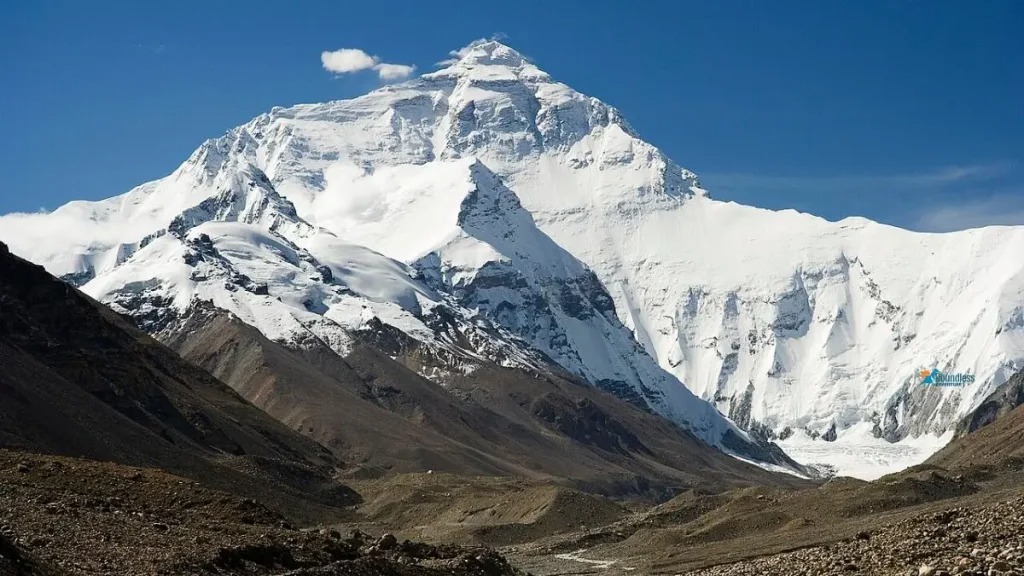
The North Face of Mount Everest is one of the most legendary and challenging sides of the highest mountain in the world. Located in Tibet, this face rises sharply from the Tibetan Plateau and offers some of the toughest climbing routes on Everest. The North Face is known for its steep ridges, icy slopes, and raw, rugged terrain that demands skill and endurance from climbers.
Here you will know every detail about the North Face of Mount Everest. Its geography, weather, and climbing routes to historical figures like George Mallory, and the role of iconic places such as Rongbuk Monastery.
No matter if you’re a mountain lover, a hiking newbie, or just curious about the adventure, this guide has your back—practical tips, real insights, and everything in between. You will also learn about the permit process and what makes this route so distinct from its southern counterpart.
If you are planning an expedition or a once-in-a-lifetime trek to the North Face of Mount Everest, Boundless Adventure can help turn your plan into reality. As a local expert and government-licensed tour operator, Boundless Adventure provides well-organized trips to North Base Camp in Tibet. They focus on safety, comfort, and cultural immersion.
Facts About the North Face of Mount Everest You Must Know Entirely
- The North Face of Mount Everest is located in Tibet, accessed through the Rongbuk Valley.
- North Base Camp (5,150 meters) is accessible by vehicle, unlike Nepal’s South Base Camp, which requires a trek.
- The North Face includes some of Everest’s most technical and dangerous climbing routes, such as the Northeast Ridge and the Three Steps.
- The route of the North Face of Mount Everest includes the Hornbein Couloir and the Second Step, a near-vertical rock face at around 8,610 meters.
- The North Face gained historical significance in 1924 when George Mallory and Andrew Irvine disappeared during a summit attempt.
- The Rongbuk Monastery, the world’s highest monastery, is near the North Base Camp and holds cultural and spiritual significance.
- Most of the approach to the North Face is done by road travel, making it more logistically straightforward compared to trekking routes in Nepal.
Explore Top Everest Region Treks Packages in Nepal, Click Here.
Where is the North Face of Mount Everest Located?
This famous side of the mountain lies in Tibet, inside China. It sits just above the beautiful Rongbuk Valley and can be reached by a smooth road from Lhasa through Shigatse. At the base, you’ll find the Rongbuk Glacier and the historic Rongbuk Monastery, both offering breathtaking views of the steep ice-covered cliffs above.
What Is the Altitude of the North Face of Mount Everest?
The North Face of Mount Everest reaches all the way up to the summit at 8,848.86 meters (29,031.7 feet). It starts from the Tibetan side and includes tough spots like the North Col and summit ridge. Climbing here means facing extremely high altitudes where there’s very little oxygen, making it one of the hardest routes on the mountain.
How Old is the North Face of Mount Everest?
The North Face of Mount Everest is about 60 million years old. It was formed when the Indian and Eurasian tectonic plates crashed into each other. The face is mostly made of ancient sea-floor rocks like limestone, marble, and shale. And believe it or not, Everest is still slowly rising a few millimeters every year.
How Cold is the North Face of Mount Everest?
The North Face of Mount Everest is incredibly cold all year round. At the North Base Camp (5,150 meters), summer days can feel mild—around 6°C to 12°C—but nights are usually below freezing. As you climb higher, it gets much colder. Around the North Col and higher camps, daytime temperatures drop to −15°C to −25°C, and nights can fall below −30°C.
Near the summit, it gets even harsher, with daytime temperatures between −20°C and −30°C, and nights dropping to −40°C or lower. Strong winds make it feel even colder, making climbing here extremely tough.
What Is the Average Temperature of the North Face of Mount Everest?
The average temperature on the North Face of Mount Everest drops to −20°C to −30°C (−4°F to −22°F) even during the climbing season (April–May). For more detailed info, read blog “How cold is Mount Everest“.
North Face of Mount Everest View Point
Rongbuk Monastery, near the North Base Camp, you will see a clear view of the face and the Rongbuk Glacier. The North Base Camp itself is reachable by vehicle. From these vantage points, you will experience the mountain’s northern side without technical climbing.
Rongbuk Monastery – A Peaceful Place Beneath Mount Everest
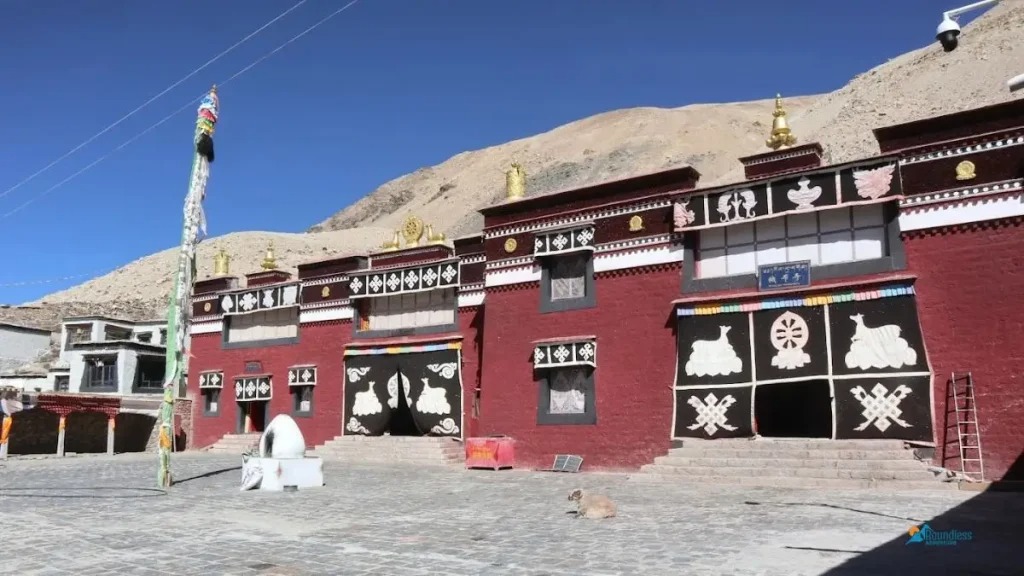
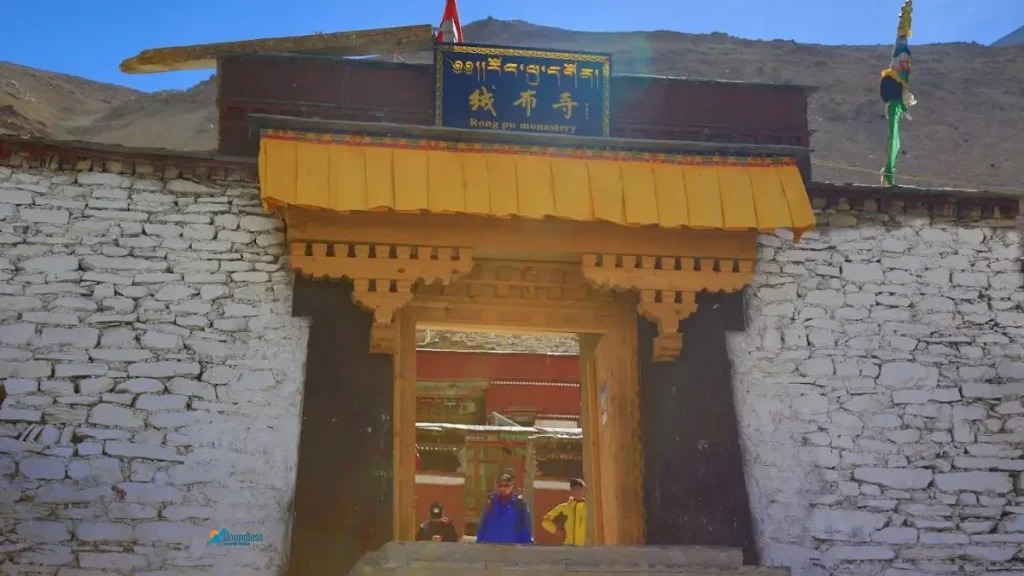
Rongbuk Monastery is one of the most peaceful and breathtaking places in the Himalayas. Located in Tibet at around 5,009 meters (16,434 feet) above sea level, it’s known as the highest monastery in the world. What makes it truly special is its view—right in front of you stands the mighty North Face of Mount Everest.
A Spiritual Place with Deep History
This monastery was founded in 1902 by a Tibetan lama from the Nyingma school of Buddhism, the oldest branch of Tibetan Buddhism. Even before the monastery was built, monks and hermits used this quiet valley as a place to meditate in caves.
The view of Everest from Rongbuk is beautiful. During sunrise or sunset you will experience the shades of gold and pink on mountains. It’s a magical sight that you will see.
A Stop for Climbers and Travelers
Rongbuk is the last stop before reaching Everest North Base Camp. It is only a few kilometers away. You will stay here for a night to rest and adjust to the altitude. You will experience the silence, the open sky, and the presence of the world’s tallest mountain create a feeling of calm and wonder that stays with you.
How to Get There
To reach Rongbuk Monastery, you’ll need to travel from Lhasa to Shigatse. You need to continue through Tingri to Rongbuk. The road is well-paved. You’ll need to join a guided tour with the right travel permits.
History of the North Face of Mount Everest
The North Face of Everest has a story that begins around 60 million years ago. Back then, two massive land plates — the Indian and Eurasian plates — crashed into each other. That collision didn’t just shake things up; it pushed the land skyward and slowly gave rise to the mighty Himalayas, including Mount Everest.
The rocks that make up the North Face today—limestone, marble, and shale—weren’t always part of a mountain. They were once resting on the bottom of an ancient ocean. Over millions of years, those ocean-floor rocks were forced upward, becoming the steep cliffs and icy slopes climbers now face.
In modern times, The North Face has gained a legendary reputation among mountaineers. It’s known for its extremely cold, tricky climbing routes, and one of its most feared zones, the “Death Zone.” The Death Zone is the area above 8,000 meters (26,247 feet). In this zone, the air is so thin that your body starts to shut down without enough oxygen.
First Ascent of the North Face of Mount Everest
On June 8 or 9, 1924, English mountaineer George Herbert Leigh-Mallory was a key figure in the first three British expeditions to Mount Everest. He was last seen with his climbing partner, Andrew “Sandy” Irvine.
They were making their way toward the summit during the 1924 expedition. Their disappearance sparked an ongoing debate over whether they had reached the top before perishing. In 1999, Mallory’s body was discovered at an altitude of 26,760 feet by the Mallory and Irvine Research Expedition, along with several of his personal belongings.
What Is the Death Zone on the North Face of Mount Everest?
The Death Zone begins above 8,000 m. Oxygen levels are less than one-third of sea level, increasing the risk of high-altitude cerebral or pulmonary edema. The North Face route has multiple exposed sections, especially near the Second Step, where many fatal accidents have occurred.
How Many Camps Are on the North Face of Mount Everest?
Climbers typically use several camps to acclimate and rest during the ascent of the North Face:
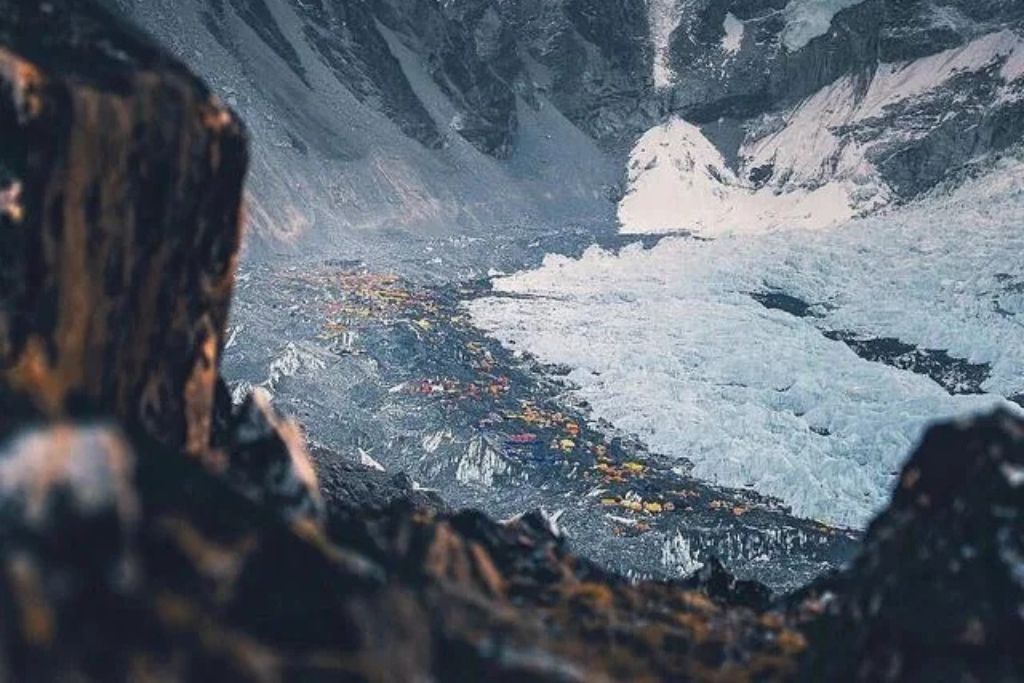
- North Base Camp (5,150 m): Road-accessible starting point.
- Advanced Base Camp (6,400 m): Located near Rongbuk Glacier.
- Camp I (North Col) (7,020 m): Critical acclimatization point.
- Camp II (7,700 m): Along the Northeast Ridge.
- Camp III (8,200 m): Higher on the ridge.
- Camp IV (8,500–8,600 m): Final camp before summit push.
Best Time to Visit the North Face of Mount Everest
The North Face of Mount Everest is located in Tibet. It presents a unique combination of extreme altitude and dry, highland climate. Suppose you are visiting or trekking, the northern side. The right time is the most important thing you must consider.
The following is a breakdown of each season to help you decide when to plan your journey to the North Face of Mount Everest:
Spring (April to early June)
Spring is the best time to visit the North Face of Mount Everest. The weather is stable. You will see a clear sky and stunning views of the North Face.
- Climbing Season: Most summit attempts from the north occur during May, when temperatures are cold but manageable, and the jet stream usually shifts away from the mountain.
- Trekking Conditions: Access to North Base Camp is more reliable, and the road from Tingri is passable.
- Temperature Range: Daytime highs at base camp may reach 10°C, while nights drop well below freezing.
Summer / Monsoon (Mid-June to August)
Although the Tibetan plateau lies in a rain shadow, monsoon effects are still felt during summer.
- Visibility: Clouds and occasional snowfall can obscure views of Everest.
- Travel Challenges: Road conditions to the base camp can become rough due to landslides or rain in lower areas.
- Temperature Range: Relatively warmer, with base camp temperatures reaching up to 15°C during the day, but still cold at night.
Autumn (September to early November)
Autumn is the second-best season for visiting the North Face. Post-monsoon skies tend to be crisp and clear, especially in September and October.
- Trekking: Ideal for those interested in the North Base Camp Trek or visiting Rongbuk Monastery.
- Photography: Autumn light offers exceptional clarity for landscape and mountain photography.
- Climbing: Fewer climbers attempt summits in autumn due to colder temperatures and reduced support on the mountain.
Winter (Late November to March)
Winter brings severe cold and high winds to the North Face of Everest, making this the most challenging season for any activity.
- Access: The road to base camp may be closed due to snow or icy conditions.
- Climbing: Extremely rare during this season; wind chill on the summit can reach −60°C.
- Trekking and Tourism: Limited to those seeking solitude and who are well-prepared for extreme conditions.
How to Climb the North Face of Mount Everest?
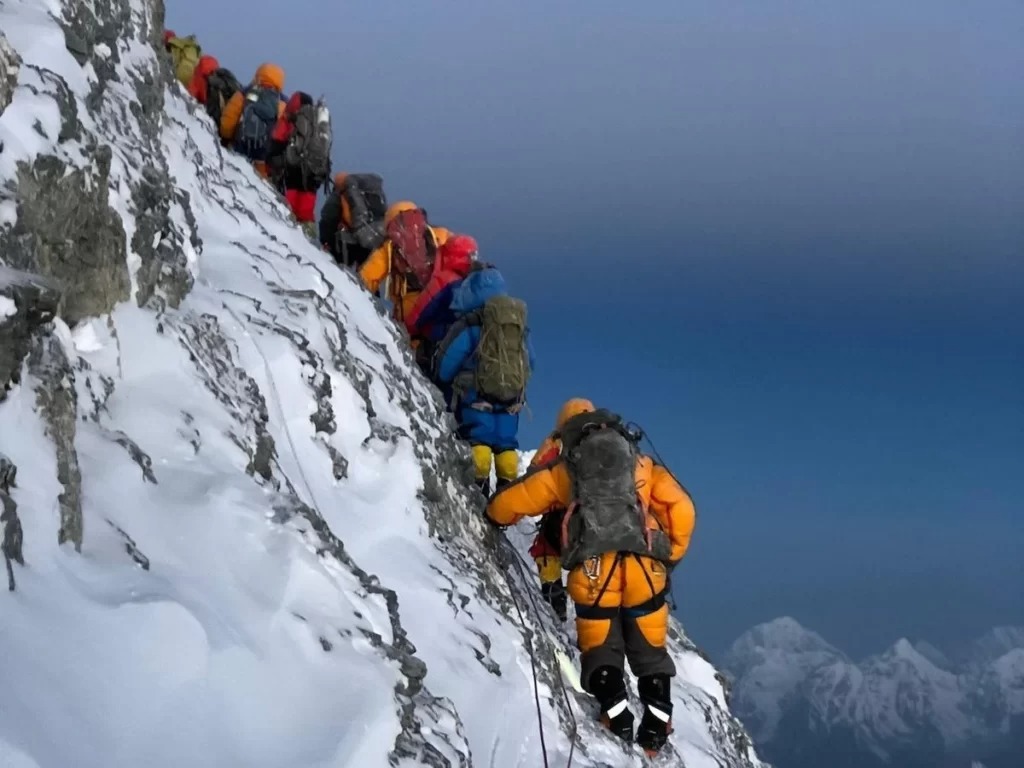
The journey starts at the North Base Camp, then moves up to the Intermediate and Advanced Base Camps. From there, climbers reach Camp I at the North Col. Higher camps (II to IV) are set up along the ridge, leading to the famous and challenging Three Steps before finally reaching the summit.
Preparation
Before enrolling in the climb, you must practice thorough physical training. You must build endurance, strength, and high-altitude experience. You must prepare equipment suitable for extreme cold and variable weather. You must be prepared for mental readiness for the challenging conditions and technical climbing challenges on the North Face.
Learn about Right Equipment For High Altitude Trekking
Permits and Logistics
Climbing Mount Everest from the Tibetan side involves careful planning, including getting the right permits and organizing your travel and support. These permits make sure climbers follow local rules and help manage safety on the mountain. Along with paperwork, you also need to plan how to get to the base camp, hire guides and Sherpas, and arrange supplies for the climb.
Tibet Travel Permit
This permit allows you to legally enter Tibet. It’s usually arranged by your travel agency before your trek. Without this permit, you cannot travel or begin your Everest trek.
Mountaineering Permit from CTMA
This permit is issued by the China Tibet Mountaineering Association (CTMA). You must have this permit to climb Everest from the north side. It limits the number of climbers and ensures that safety regulations are followed by the trekkers.
Alien’s Travel Permit
Foreign visitors need this permit to access certain restricted areas in Tibet, including Everest Base Camp. Your tour operator typically arranges this for you.
Logistics to Keep in Mind
- You must arrange transportation from Lhasa or Shigatse to North Base Camp, usually by jeep or truck.
- You must organize all climbing gear, food, oxygen, and tents well in advance.
Base Camp Acclimatization
North Base Camp, located at 5,150 meters, is accessible by vehicle. You can spend several days here acclimatizing to the altitude and preparing gear. Acclimatization hikes around the camp and to nearby elevations. It helps to reduce the risk of altitude sickness. Proper rest and nutrition during this phase are crucial to adapt to the thinner air.
Summit Push
The summit push involves a series of rotations through the higher camps — Advanced Base Camp, Camp I, Camp II, Camp III, and Camp IV — for further acclimatization and preparation. Climbers ascend gradually along the Northeast Ridge, tackling difficult sections such as the
The Summit
The final push to the summit usually begins from Camp IV. You must start in the early hours to maximize daylight and minimize exposure to harsh weather. You will face extreme cold, wind, and low oxygen levels on the summit ridge. When you reach the 8,848-meter peak, you will experience the beautiful views. The descent demands caution as exhaustion and weather conditions can increase risks.
What is the Main Route of the North Face of Mount Everest?
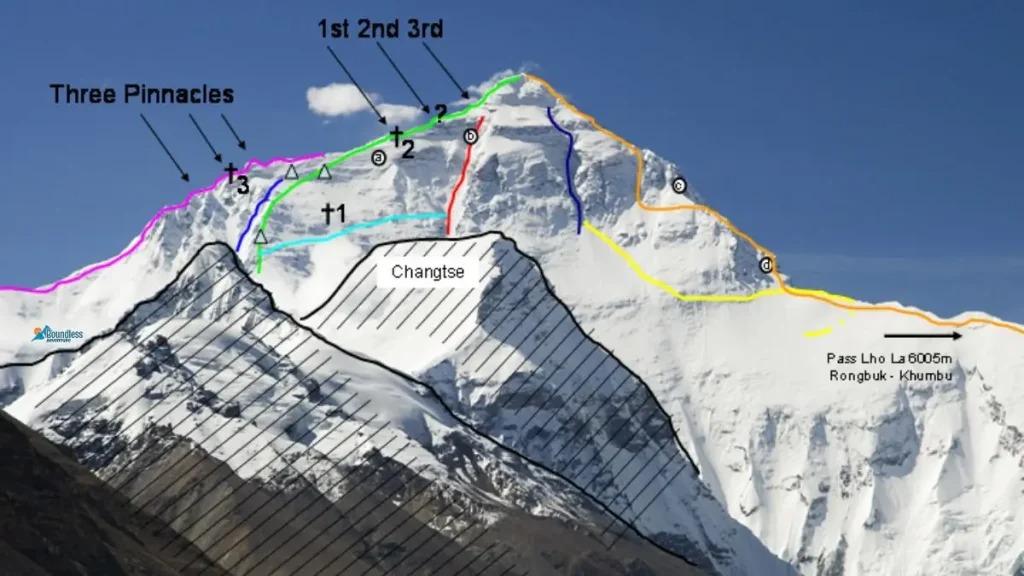
The North Face of Mount Everest has four major camps and several technical obstacles. The Three Steps, particularly the Second Step with its ladder, are physically and mentally challenging. The main routes of the Northern side of Mount Everest are explained:
Hornbein Couloir
- This steep, narrow gully runs from about 8,000 m to 8,500 m, with slopes averaging 47°, increasing to 60° near the top.
- First ascended on 22 May 1963 by Tom Hornbein and Willi Unsoeld during the U.S. Expedition via the West Ridge, making history with a challenging summit push.
- Fewer than ten successful ascents have occurred since, due to its extreme technicality and exposure.
Norton Couloir
- The Norton Couloir, or Great Couloir, is a steep ravine east of the summit pyramid, reaching up to about 150 meters below the top.
- Named after Edward Norton, who climbed it to approximately 8,572.8 m in 1924 without supplemental oxygen—a record unmatched for decades.
- Reinhold Messner used this couloir in his legendary, oxygen-free ascent in 1980.
Three Steps
- Located on the Northeast Ridge between ~8,564 m and 8,710 m, the famous Second Step at 8,610 m is particularly steep, requiring a 40 m climb with a vertical 5 m headwall often assisted by a ladder.
- Climbers have used this ladder, originally placed in 1975 and updated in 2007, to navigate the technically difficult Second Step.
- The First Step has become a well-known landmark and caution point, with several fatalities near its base.
Three Pinnacles
- The Three Pinnacles are jagged rock formations standing at roughly 7,800 m, 8,100 m, and 8,200 m along the Northeast Ridge; all are located within the Death Zone
- Considered one of Everest’s toughest technical challenges, they resisted several early attempts—including a fatal 1982 expedition—before being successfully climbed by Russell Brice and Harry Taylor in 1988.
- Climbers who summit via the Northeast Ridge typically bypass these pinnacles, taking a more straightforward line.
Technical Routes and Later Milestones
- In 1963, Americans Tom Hornbein and Willi Unsoeld pioneered a new route by traversing from the West Ridge into the North Face, ascendng the Hornbein Couloir.
- In 1980, legendary mountaineer Reinhold Messner executed a solo ascent without supplemental oxygen, climbing via the Northeast Ridge into Norton Couloir.
What is the Weather of the North Face of Mount Everest?
Expect fierce winds, sub-zero temperatures, and sudden storms. Even in the pre-monsoon season (May), when most ascents occur, conditions remain brutal. Winter temperatures can drop below –40 °C. The short window between May and early June offers the most stable weather, but climbers must still prepare for extreme cold and oxygen-poor air.
| Season | Base Camp Temp (Day/Night) | High Camp Temp (Day/Night) | Summit Temp (Day/Night) | Comments |
| Spring | 8°C / -5°C | -15°C / -25°C | -20°C / -30°C | Preferred climbing time |
| Summer | 6°C / 0°C | -20°C / -30°C | Variable | The monsoon season is risky |
| Autumn | 7°C / -10°C | -18°C / -28°C | -22°C / -32°C | Clearer weather |
| Winter | -10°C / -25°C | -30°C / -45°C | -40°C / -60°C | Extreme cold is not advised |
Risks of Altitude Sickness on the North Face of Mount Everest
An ascent of the North Face of Mount Everest is a fight against the thin air on the mountain. As you rise in altitude, your body cannot adjust to the low level of oxygen. It exposes you to altitude sickness. Here’s what every climber should understand:
Oxygen Deprivation Starts Early
From the moment you ascend above 3,000 meters, your body starts feeling the pressure. On the North Face, you gain elevation quickly, leaving less time to adjust — a recipe for altitude issues.
Acute Mountain Sickness (AMS)
This is the first warning sign. Mild symptoms like headache, fatigue, or nausea often go unnoticed or are brushed off. But if ignored, AMS can quickly escalate to something more dangerous.
High-Altitude Pulmonary Edema (HAPE)
At extreme altitudes, fluid may start filling your lungs. Breathing becomes labored, and you may feel tightness in the chest or a persistent cough. This condition can be fatal if not treated or if descent is delayed.
High-Altitude Cerebral Edema (HACE)
This is the most severe form. It causes brain swelling, resulting in confusion, vision issues, slurred speech, and loss of coordination. Without immediate descent, HACE can be deadly.
Cold and Dehydration Make It Worse
The freezing winds and dry air of the North Face dehydrate your body, slowing your circulation and increasing the chances of illness.
Rescue Isn’t Easy Up There
Unlike other parts of the mountain, the North Face has very limited access. Helicopter rescues aren’t possible above a certain height, and you’re often on your own.
Fewer Rest Stops for Acclimatization
The route has fewer designated spots for gradual adjustment. That means climbers often push harder with less time to acclimate, increasing the danger.
How Can You Stay Safe?
The altitude, weather, and terrain become challenging and risky if you do not prepare properly. Here’s how you can stay safe on your journey:
Plan Your Ascent Slowly and Wisely – Don’t Rush
One of the biggest mistakes climbers make is trying to move too fast. The higher you go, the less oxygen there is, and your body needs time to adjust. Rushing increases the risk of altitude sickness, exhaustion, and even serious health issues. Take your time, follow a gradual itinerary, and rest properly at each camp. The slower you go, the safer you’ll be.
Hydrate Consistently and Eat Properly
Staying hydrated is key at high altitudes. The cold, dry air makes you lose water faster, so you need to drink more than usual, even if you don’t feel thirsty. Along with that, eating enough calories helps keep your energy levels up. Trekking and climbing burn a lot of fuel, so don’t skip meals, and try to eat warm, nourishing foods whenever possible.
Listen to Your Body and Turn Back if Symptoms Appear
Your body will tell you when something’s wrong. If you feel dizzy, have a bad headache, feel nauseous, or are struggling to breathe, don’t ignore it. These are signs of altitude sickness and can become life-threatening if not treated. Turning back may feel disappointing in the moment, but it could save your life, and you can always try again another time.
Take Altitude Medication (like Acetazolamide) with Medical Advice
Some climbers take acetazolamide (Diamox) to help their bodies adjust to altitude more easily. But this medication isn’t for everyone, and it can have side effects. Always talk to your doctor before the trip to see if it’s right for you, and never take it without proper guidance. It’s a helpful tool, but it’s not a substitute for a good acclimatization plan.
Train Your Body at Higher Altitudes Before Attempting Everest
Everest isn’t a mountain you just show up and climb. You need to train at high altitudes first—ideally by doing smaller treks or climbs at 3,000–5,000 meters. This helps your body get used to thinner air and prepares you for the physical and mental demands of Everest. The better your preparation, the safer your climb will be.
Final Thoughts
Seeing the North Face of Mount Everest up close is something you never forget. Whether you are at base camp, hiking the rugged trails, or just soaking in the silence beneath the icy summit. The North Face of Mount Everest has a way of grounding you. It is about the journey, the challenge, and the experience you get during your journey.
Ready to Explore Everest from Tibet?
Let Boundless Adventure help you plan your perfect Himalayan journey—from Base Camp visits to full climbing expeditions. Reach out today for expert-guided packages tailored to your pace, safety, and curiosity.
FAQ’s
How do I get to the North Face of Mount Everest?
To reach the North Face, you’ll need to travel to Tibet via mainland China. From there, an overland journey takes you to the Chinese Everest Base Camp near the Rongbuk Monastery. A Tibet travel permit and climbing clearance from the Chinese authorities are required in advance.
Is the North Face more difficult than the South Face?
Well, the North Face is usually regarded as technical and exposed compared to the South Face. It is characterized by steep ridges, gusts, and tricky rock segments such as the Second Step. More climbing skills and experience are required in this route, particularly on the approach to the summit.
What is the best time to visit the North Face of Mount Everest?
The best time visit the North Face of Mount Everest is from late April to early June or from late September to early October. These windows offer more stable weather and manageable wind speeds.You must avoid summer and winter due to monsoon and extreme cold.
Can you trek to the North Face without climbing the summit?
Yes, you can visit the Tibetan Base Camp near Rongbuk Monastery without attempting the summit. There you will experience stunning views of Everest’s northern wall, and it doesn’t require mountaineering experience. However, proper permits and a guided tour are mandatory in Tibet.
Is altitude sickness more common on the North Face route?
Altitude sickness is a serious risk on the North Face due to rapid elevation gain and lower oxygen levels. Acclimatization days at various camps are crucial to reduce the chance of AMS, HAPE, or HACE. Staying hydrated and ascending gradually helps a lot.
What kind of permits do I need to climb Everest from the north side?
You need a Tibet travel permit, a climbing permit from the Chinese Mountaineering Association, and additional logistical approvals. These are normally coordinated by Chinese or endorsed international adventure organizations. This is a no-go area to independent travel.
Can beginners climb the northern side of Mount Everest?
No, beginners cannot climb the north side of Mount Everest. It has technical challenges and limited rescue options. It is best suited for experienced high-altitude climbers who’ve already summited other major peaks. New climbers typically opt for the South Face in Nepal, which has more support infrastructure.